
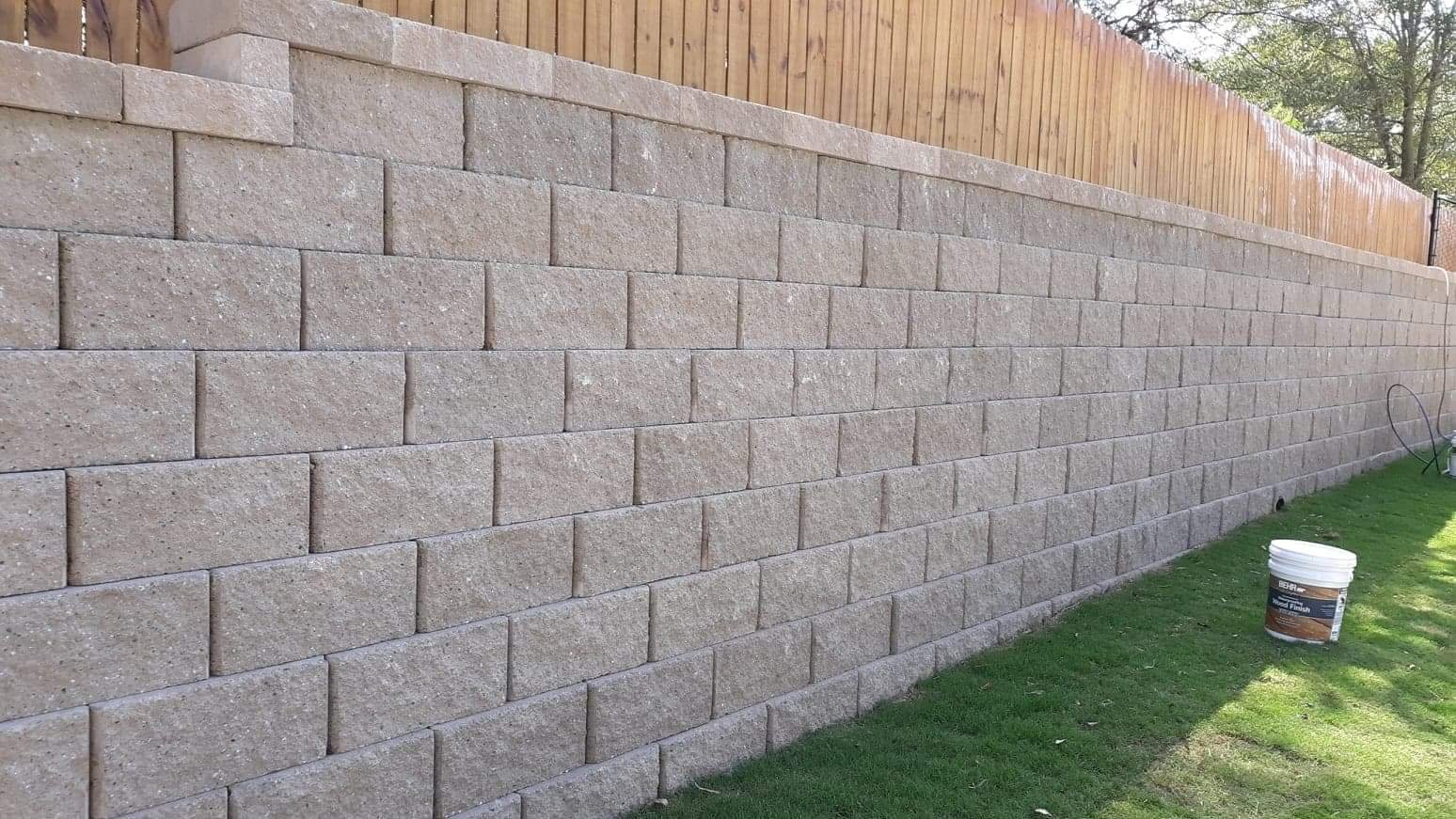
 Retaining Walls
When Does a Retaining Wall Need Drainage?
Short answer: almost always. Here's why water behind a wall is the leading cause of failure — and what proper drainage actually looks like.
The physics of wall failure
Soil saturated with water is dramatically heavier than dry soil. When that saturated soil sits behind a wall with no way for the water to escape, it exerts hydrostatic pressure — a sideways force that pushes the wall forward. Over time, that pressure bows, leans, and eventually topples walls.
This is the single most common cause of retaining wall failure. Not the material, not the height, not the construction — the water behind it with nowhere to go.
What proper drainage looks like
Behind every wall we build, we install drainage aggregate — washed stone that water flows through freely — and a perforated pipe at the base that carries collected water to a discharge point. Weep holes let water exit the face of the wall as a backup.
Geotextile fabric keeps the drainage stone separate from the soil so fine particles don't clog the drainage layer. The whole system is designed so water never builds up behind the wall in the first place.
Does every wall need it?
Walls holding back any soil that gets wet need drainage. That's essentially every retaining wall in Atlanta, where heavy rain is regular. Even a 2-foot wall can fail if water pools behind it during a storm.
The only walls that can sometimes skip dedicated drainage are very short, free-standing decorative walls that aren't holding back a slope. But any wall that's retaining soil — even at 18 inches — should have drainage behind it.
Signs your existing wall has a drainage problem
A wall that's bowing, leaning, or showing horizontal cracking at the joints is likely under hydrostatic pressure. Water seeping from the face or pooling at the base after rain means water is building up behind it. Any of these signs means the wall is failing and needs attention.
If you're seeing these signs, don't wait. A leaning wall is cheaper to address before it collapses. We evaluate the wall, the drainage, and the soil, and recommend whether a repair or rebuild is the right path.
Frequently Asked Questions
Can I add drainage to an existing wall?
Sometimes. If the wall is still structurally sound, we can excavate behind it and install drainage. If the wall has already failed, it usually needs to be rebuilt with drainage built in.
How tall can a wall be without engineering?
Generally walls under 4 feet can be built with standard modular block. Taller walls require engineering or terracing. We'll tell you which your project needs after evaluating the site.
What if my wall doesn't seem to hold water?
In Atlanta's climate, assume it will. Even soil that seems dry most of the year saturates during storms. Drainage is cheap insurance compared to rebuilding a failed wall.
Ready to put this into practice on your property?
Get a free, no-pressure estimate from a Metro Atlanta hardscaping contractor who builds it right the first time.
Request a free Estimate

Ready to Put This Into Practice?
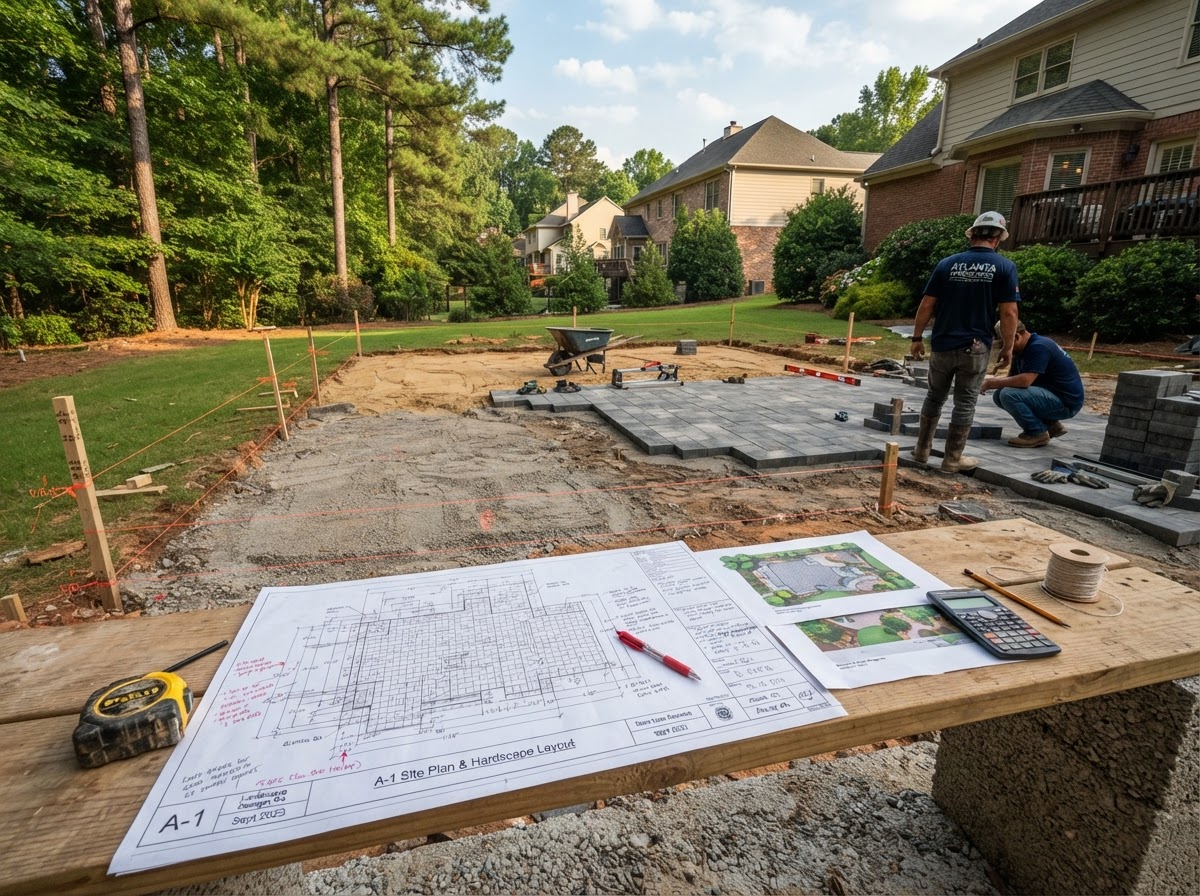
Reading is a start. A site evaluation turns these ideas into a plan for your actual property.