
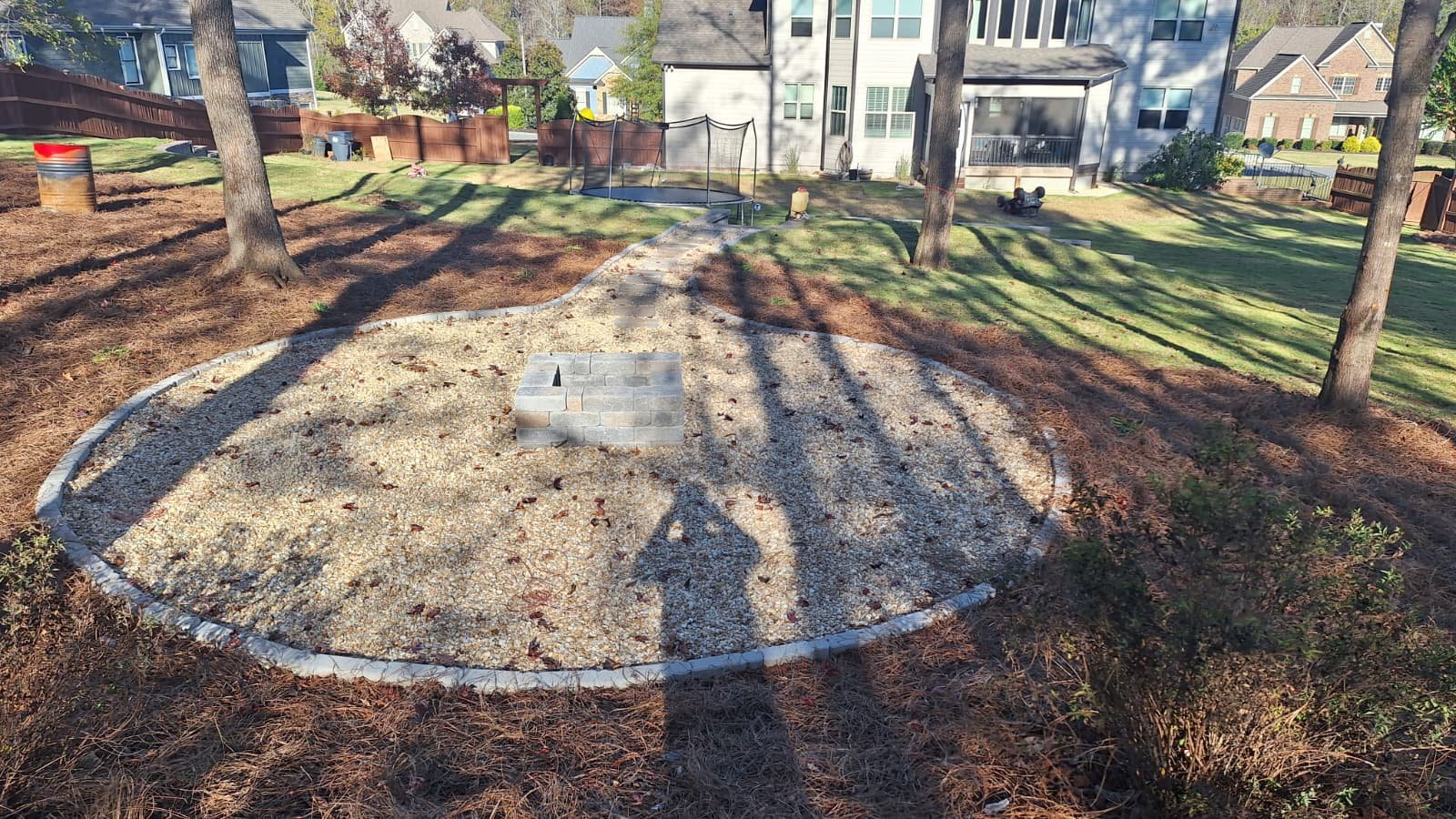
 Drainage
Signs Your Property Has a Drainage Problem
Drainage issues show up long before they become expensive. Here are the warning signs to watch for around your yard, foundation, and hardscape.
In the yard
Water standing 24 hours after rain is the most obvious sign. So is a patch of grass that's always thin or dead while the rest of the lawn is fine — that area is likely staying saturated. Eroding mulch or soil washing out of beds points to concentrated runoff.
A visible channel carved through the lawn or a muddy stripe that never dries means water is taking the same path every storm and the grade is funneling it there.
Around the house
Water stains on the foundation, a damp or musty crawl space, and efflorescence (white mineral deposits) on foundation walls all indicate water is reaching the structure. These are signs to take seriously — foundation moisture leads to rot and structural damage.
Downspouts dumping water within a few feet of the house, or soil sloping toward the foundation instead of away, are the setups that cause these problems. If you see either, the fix is usually grading and downspout extension.
In the hardscape
A patio, walkway, or driveway that's starting to settle, dip, or crack may have water undermining the base. If water pools on the surface or runs toward the house across a patio, the slope is wrong and the base is at risk.
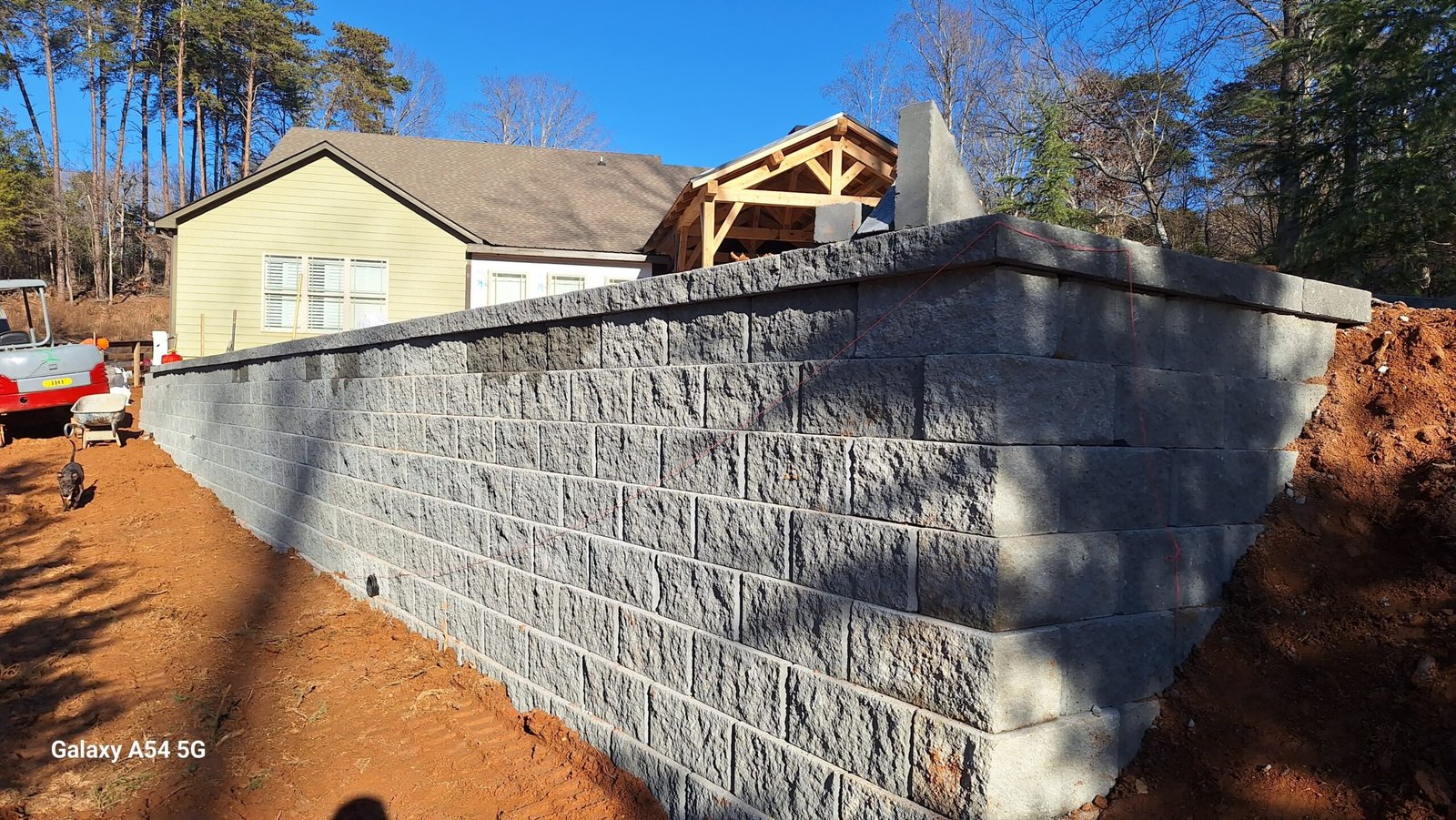
Retaining walls that are bowing, leaning, or showing horizontal cracks at the joints usually have a drainage problem behind them. Water pressure is pushing the wall forward — and it will get worse, not better.
When to call someone
Any one of these signs is worth an evaluation. Multiple signs together mean the problem is already affecting more than one part of the property. The longer drainage issues sit, the more expensive the damage — to the lawn, the hardscape, and the house.
We evaluate the whole property to find where water is coming from and where it needs to go, then recommend grading, drainage, or both. The goal is a fix that lasts, not a patch.
Frequently Asked Questions
Is a little standing water normal?
Brief pooling during a heavy storm is normal. Water still present 24 hours later is not — it means the soil isn't draining or the water has no outlet.
Can a drainage problem damage my foundation?
Yes. Water pooling near the foundation seeps into the crawl space, causes soil expansion that cracks walls, and can undermine footings over time. It's one of the most expensive problems to ignore.
My retaining wall is leaning — is that drainage?
Very likely. The most common cause of wall failure is hydrostatic pressure from water behind the wall with no drainage. A leaning wall needs evaluation before it fails completely.

Ready to Put This Into Practice?
Reading is a start. A site evaluation turns these ideas into a plan for your actual property.