
 Drainage
Why Water Pools in Your Yard After Heavy Rain
Standing water after a storm usually comes down to slope, soil, or runoff with nowhere to go. Here's how to read what your yard is telling you.
The three usual suspects
When water sits in your yard long after the rain stops, it's almost always one of three things: a low spot with no outlet, compacted clay soil that won't absorb water, or runoff from a slope or roof that has nowhere to drain. Often it's a combination.
Atlanta's heavy clay is the underlying culprit in many cases. Clay particles are fine and pack tightly, so water infiltrates slowly. When a storm drops rain faster than the soil can absorb it, the water sits on top — and if the grade funnels it to one spot, you get a pond.
Reading your yard's drainage pattern
Next time it rains hard, watch where the water goes. If it sheets across the surface toward a low point, that's a grade issue. If it pools everywhere evenly, that's a soil infiltration problem. If it rushes in from a slope or pours off a downspout, that's runoff concentration.
How long the water sits matters too. If it's gone in a few hours, the soil is working. If it's still there 24 hours later, the yard isn't draining at all and something needs to change.
Why this matters beyond a muddy lawn
Standing water kills grass, drowns shrubs, and breeds mosquitoes. Worse, if it's near the house, it can seep into the crawl space or foundation, causing moisture problems, wood rot, and even structural damage over time.
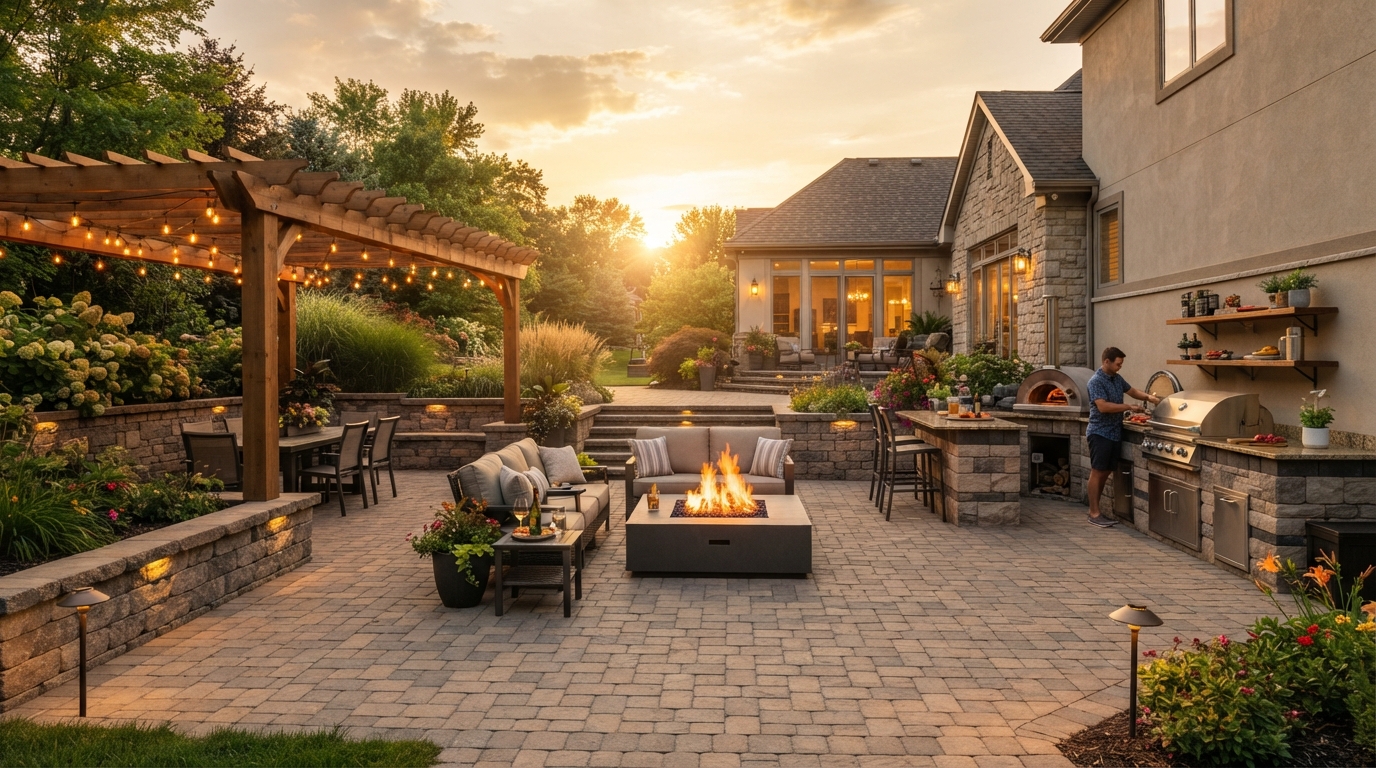
It also undermines hardscaping. A patio or walkway built in a yard that holds water will eventually heave and fail as the saturated base shifts. Fix drainage before installing hardscape, or the hardscape won't last.
What actually fixes it
If the slope is wrong, regrading directs water where it should go. If the slope is fine but water has no outlet, a French drain or catch basin system collects and carries it to a discharge point. Many properties need both — grade correction plus a drain.
The right fix depends on where the water comes from, where it can legally go, and how much area contributes to the problem. That's why we evaluate the whole yard, not just the wet spot.
Frequently Asked Questions
How long should water take to drain after rain?
Surface water should be gone within a few hours. If it's still pooling 24 hours later, the yard isn't draining and you likely have a grade, soil, or outlet problem.
Will adding soil to the low spot fix it?
Sometimes, if the issue is purely a shallow low spot. But if water has no outlet or the slope is wrong overall, filling the low spot just moves the problem somewhere else.
Can a French drain solve any drainage issue?
A French drain moves water that has nowhere to go. But if the slope is wrong, the drain may never receive the water. Grade and drainage work together — we evaluate both.
Ready to put this into practice on your property?
Get a free, no-pressure estimate from a Metro Atlanta hardscaping contractor who builds it right the first time.
Request a free Estimate
Ready to Put This Into Practice?
Reading is a start. A site evaluation turns these ideas into a plan for your actual property.