
 Materials
Best Paver Options for Outdoor Patios
Concrete pavers, natural stone, and porcelain each have a place. Here's how to choose based on how you use the space, your budget, and the look you want.
Concrete pavers — the workhorse
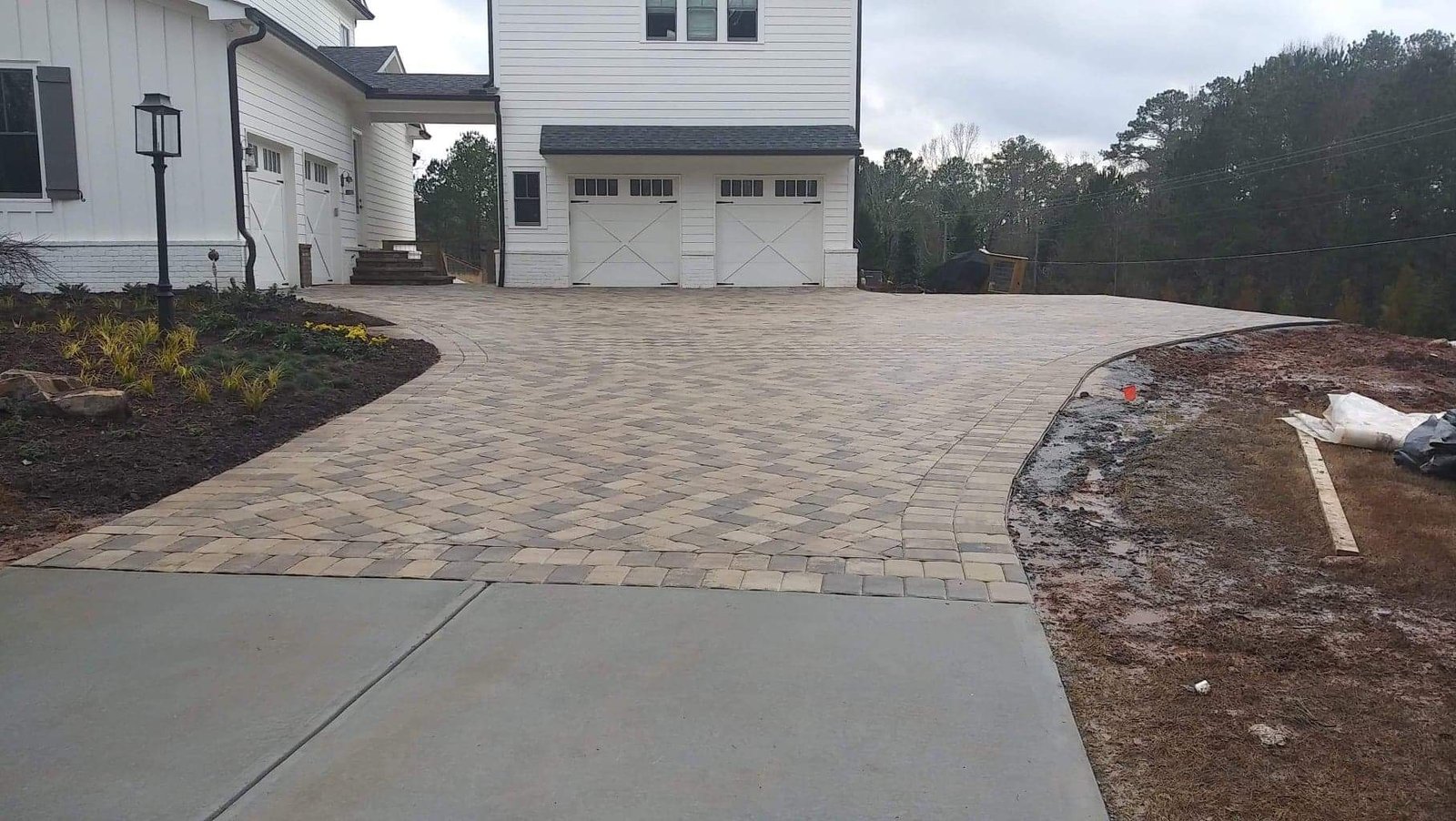
Concrete pavers from manufacturers like Belgard and Techo-Bloc are the most popular choice for good reason. They're engineered for strength, come in a huge range of colors and textures, and offer consistent sizes that make patterns clean and installation precise.
They're also the most cost-effective option that still performs well long-term. Within concrete pavers, you can choose from smooth modern finishes to textured options that mimic natural stone. Borders, inlays, and mixed patterns are all possible.
Natural stone — the premium look
Natural stone — flagstone, bluestone, travertine — gives a surface that no manufactured product can fully replicate. Each piece is unique, the colors are subtle and varied, and the texture is genuinely stone, not a print of stone.
Stone costs more and installation is more labor-intensive because pieces vary in size and thickness. It's the right choice when the look is the priority and the budget supports it. Stone also tends to stay cooler in summer than concrete.
Porcelain — the modern option
Porcelain pavers are a newer option that's gaining traction for modern designs. They're extremely dense, resist staining and fading, and offer large-format sizes with very clean lines. The color goes all the way through, so chips are less visible.
They're more expensive than concrete and require a very flat, well-prepared base because the large formats don't flex over uneven ground. Best for sleek, contemporary patios where the minimal joint look is the goal.
Choosing based on how you use the space
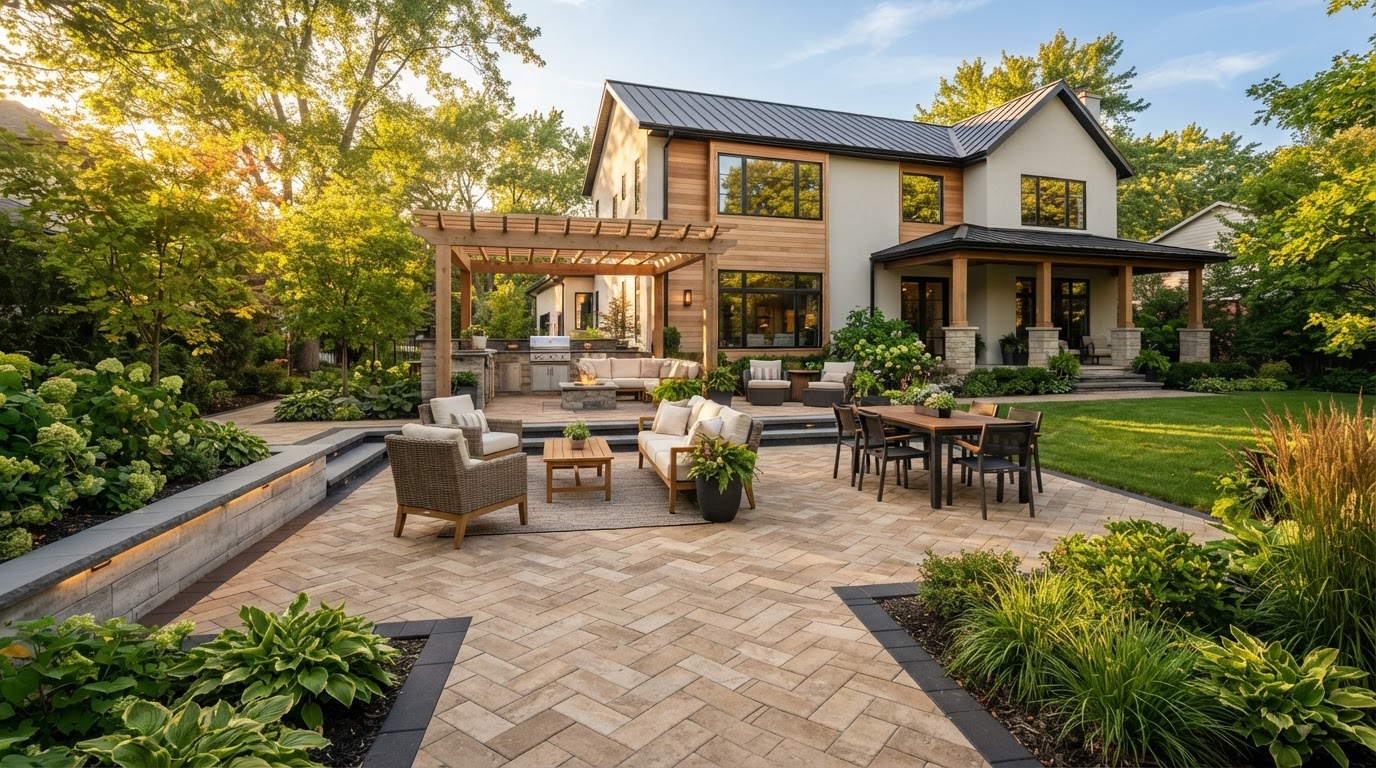
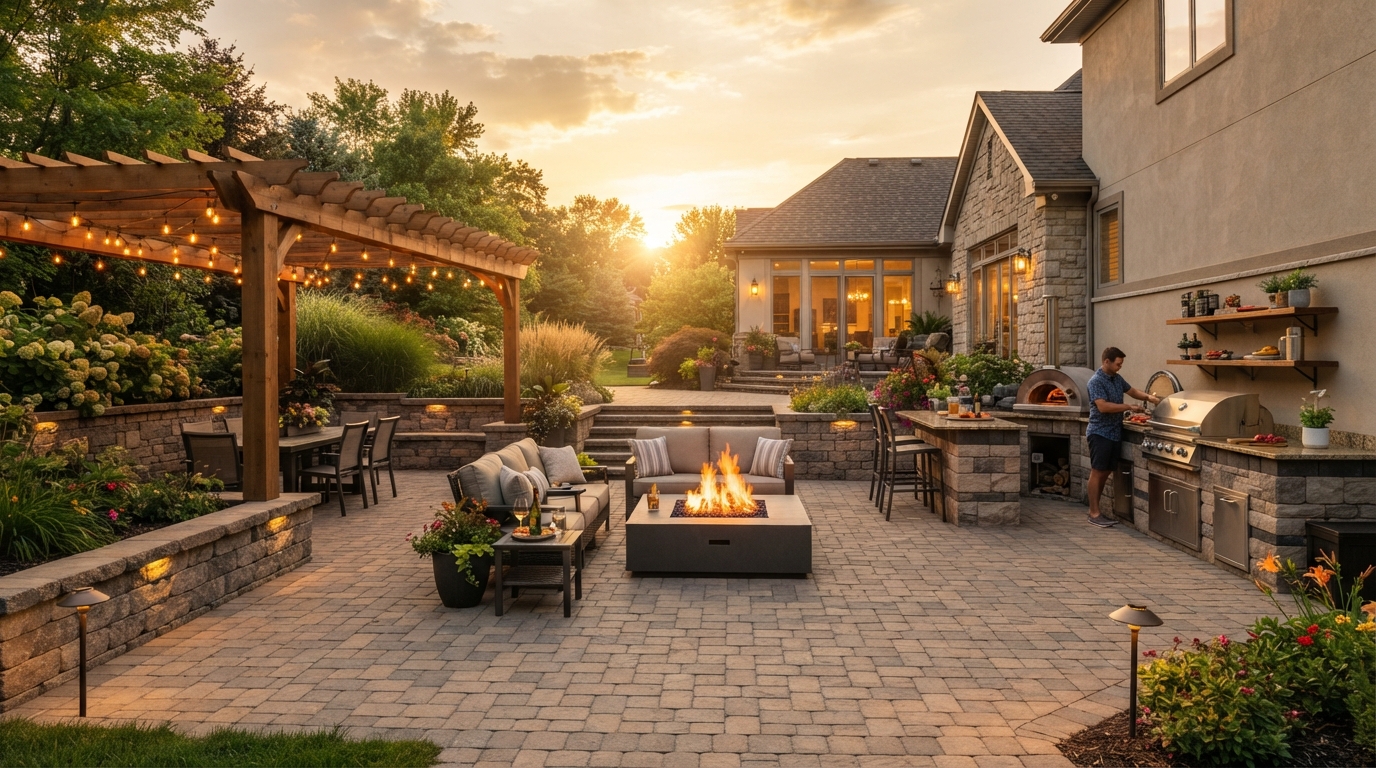
For a high-traffic family patio with a fire pit and seating wall, concrete pavers are the practical choice — durable, repairable, and available in styles that look great. For a showpiece entry or a space where the material itself is the design statement, natural stone or porcelain earns its place.
We bring samples, show you installed examples, and help you weigh look, performance, and budget together. The best paver is the one that fits how you'll actually live on the patio.
Frequently Asked Questions
Which paver lasts the longest?
All three — concrete, stone, and porcelain — can last decades with proper base and installation. Natural stone often lasts the longest, but the base matters more than the surface material.
Are concrete pavers the cheapest option?
Generally yes, among the three. But there's a wide range within concrete pavers — premium lines cost more. Stone and porcelain are typically higher-end.
Can I mix paver types in one patio?
Yes. A common approach is a concrete paver field with a natural stone border, or a contrasting inlay. We plan the pattern and transitions so it looks intentional.
Ready to Put This Into Practice?
Reading is a start. A site evaluation turns these ideas into a plan for your actual property.